Dear ECETOC Members and Stakeholders,As we bid farewell to the successes of 2023, I am delighted to extend my warmest greetings all of you as we step into 2024.Last year was marked by signific...
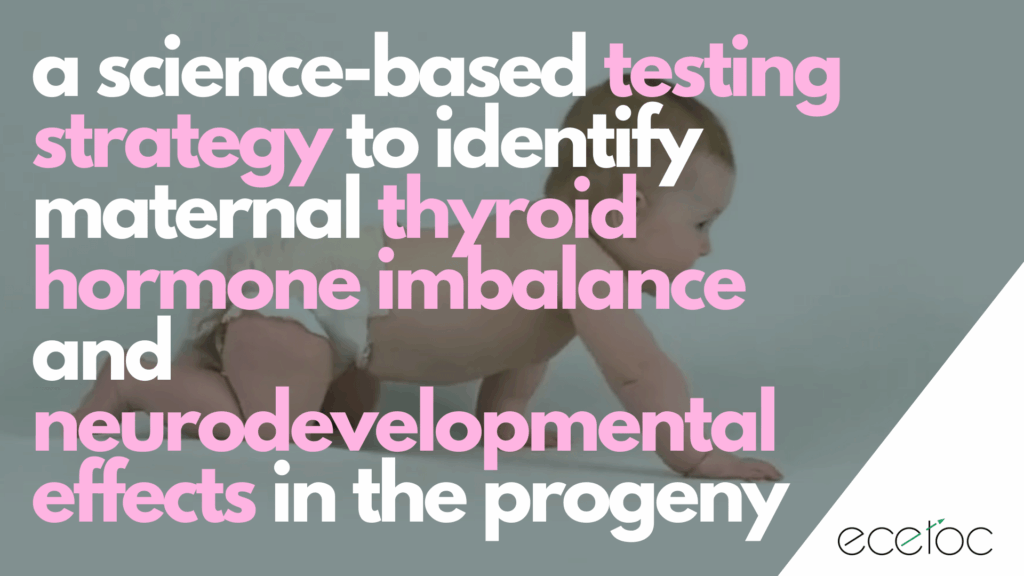
The ECETOC Thyroxine (T4) Task Force has developed a new science-based tiered testing strategy that aims to predict if substances have the potential to significantly disrupt the thyroid hormone sy...
This software was developed by a consortium of partners to facilitate the uptake of novel approaches to estimate aquatic threshold concentrations (e.g. the concentration at which 5% of the species are exposed above their EC50, HC5).
In December 2016, in response to the ‘Outline of draft Guidance Document for the implementation of the hazard-based criteria to identify endocrine disruptors’, published by ECHA and EFSA in Dece...
Terms of ReferenceReview the available literature on the sensitivity and specificity of including a second generation in reproductive toxicity testing.
Define, if possible, the triggers to...
Introduction
ECETOC initiated its targeted risk assessment (TRA) activity in 2001 and the first public version (v1) of the TRA exposure model was made available in 2004. Since then the TRA tool has...
This workshop explored the current state of the science on epigenetics and its role in reproductive toxicity. Experts from a range of scientific disciplines met over two days to share knowledge and br...
1. This expert panel was convened by ECETOC to discuss the issue of so-called low dose effects of endocrine disrupting chemicals (EDC), and to propose a possible research programme to throw more light...
SUMMARY1. This expert panel was convened by ECETOC to discuss the issue of so-called low dose effects of endocrine disrupting chemicals (EDC), and to propose a possible research programme to throw...
TR 106 : Guidance on Identifying Endocrine Disrupting Effects | June 2009
Recent revision of the European directive on plant protection products (Directive 91/414/EEC) and new regulations concerning...
Why?
Technical guidance is still missing in response to EU scientific criteria for the determination of endocrine disrupting (ED) properties (ECHA & EFSA, 2018), to identify whether observed ad...
Why?
The current development of NAMs in the field of endocrine disruption (ED) is very active as the concept of ED is evolving in various areas of toxicology including liver toxicity/xenobiotic met...
Why?
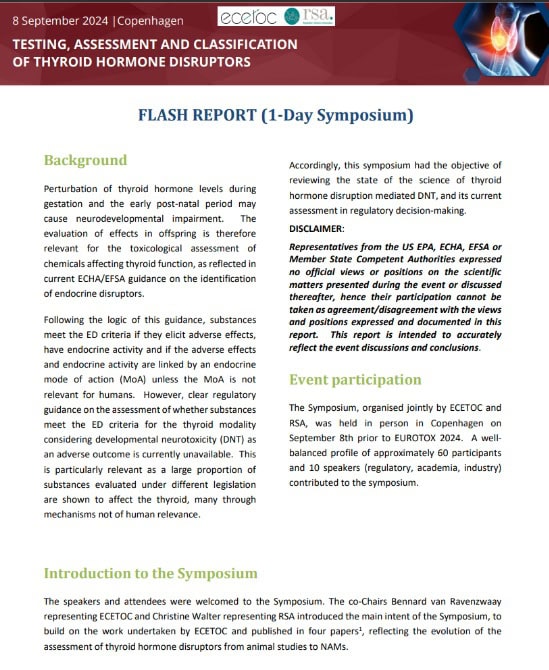
A potential connection between reduction of thyroid hormones, in particular thyroxine (T4), and impaired neuronal (mental) development in children is being discussed. This debate has caused un...